
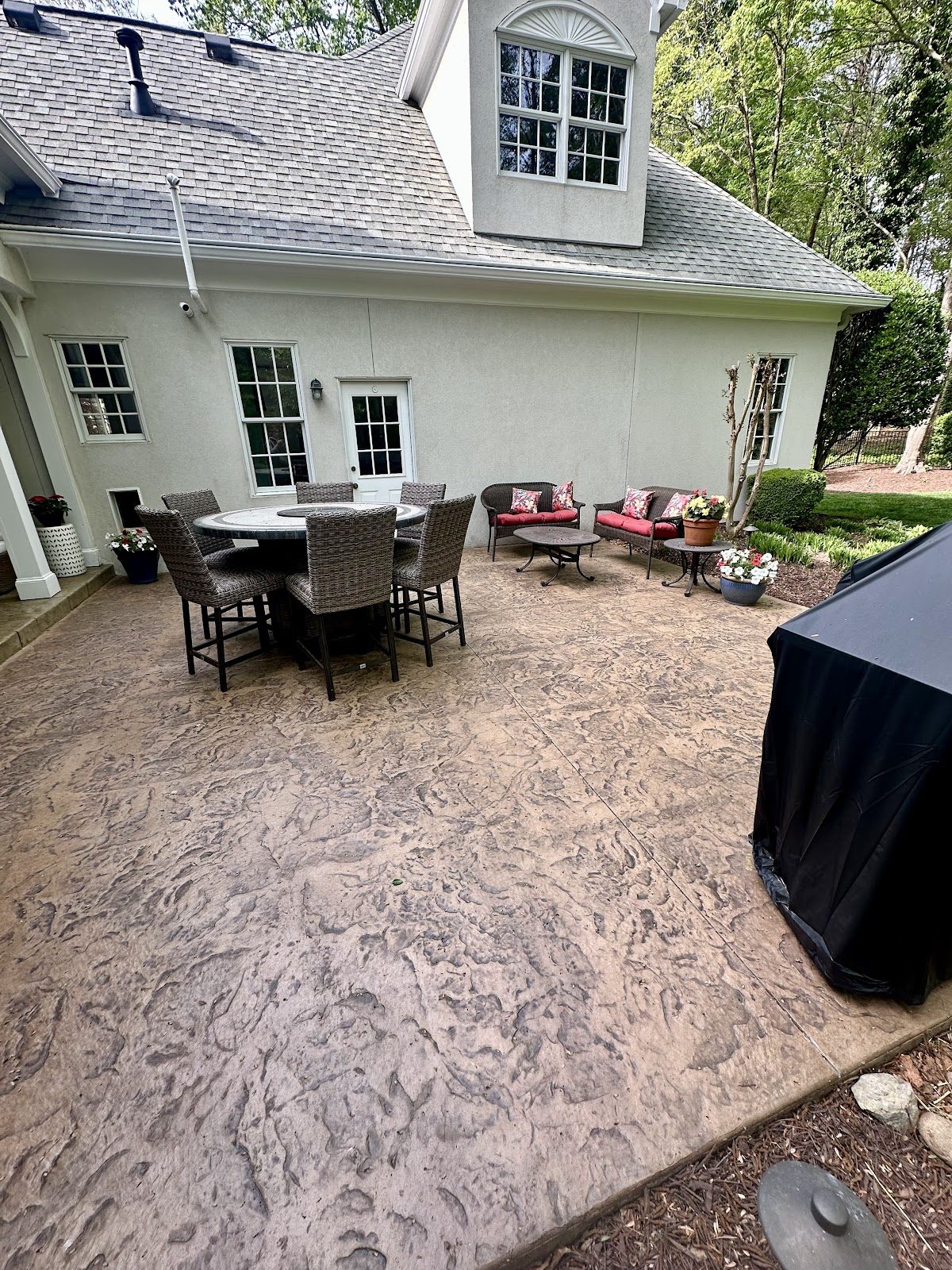
Why a level slab on falling ground is a structural problem
This is the defining condition of waterfront work and it drives most of the rest.
A patio, a pool surround or a parking area has to be effectively level to be usable. Waterfront ground is not. Something has to make up the difference, and there are only really three options: cut into the slope, build up from it, or step down it in stages.
Cutting means excavation and usually means something holding the cut face. Building up means fill, and fill on a slope is only as good as its compaction — badly compacted fill moves, and a slab on moving fill moves with it. Stepping means multiple smaller levels linked by steps, which is often the most sympathetic answer on a steep lot and the one that reads best.
Which is right depends on how much fall there is across the area and what is above and below it. It is decided on the ground, and it is the conversation worth having before anybody talks about finishes.
Can a concrete truck reach a lakefront pour?
On waterfront lots this is often the single largest variable, and it is invisible in any photograph.
Lake Norman waterfront lots are frequently long and narrow — road at one end, water at the other, house in between. The work is usually at the water end. A concrete truck is a large vehicle with a chute of limited reach, and if it cannot get within that reach of the pour, the concrete has to be moved.
That is not an obstacle so much as a cost and a plan. There are established ways to move concrete beyond a chute, and all of them are additional work. What matters is that it is established before quoting rather than discovered on the day, which is why we walk the route in as part of looking at a waterfront job.
The practical consequence for you: a quote given without anyone seeing the access is a quote with a large unpriced variable in it. On a waterfront lot, that is the one to ask about.
Where runoff goes on a waterfront lot
Drainage is a consideration on every concrete job. On a waterfront lot it is the consideration.
A hard surface does not absorb water; it concentrates it and delivers it somewhere. On flat ground that somewhere is nearby and slow. On a slope it is downhill and quick, and on a waterfront lot downhill means the bank and the lake.
So the questions are: where does water currently cross this area, where will it go once the surface is hard, and is that somewhere that can take it without eroding? A new patio that quietly redirects runoff into a soft bank is a landscaping problem you have purchased along with the concrete.
There is also a version of this that runs the other way. Water reaching the underside of a slab is what moves clay and what freeze-thaw works with. Getting water away from under the concrete is as important as getting it off the top.
What a waterfront lot changes: base, forming and sequence
None of this changes what concrete is. It changes how much of the job happens before the pour.
| Stage | What differs |
|---|---|
| Assessment | Access route, fall across the area, and where water currently goes |
| Base preparation | Compaction of any fill matters more; drainage under the slab is designed |
| Retaining | Level changes may need masonry, set out with the slab |
| Forming | Steps and multiple levels mean more forming than a single flat pour |
| Placement | Access decides how concrete reaches the work, and it is priced |
| Finish | Chosen last — and for a wet, sloping site, grip matters |
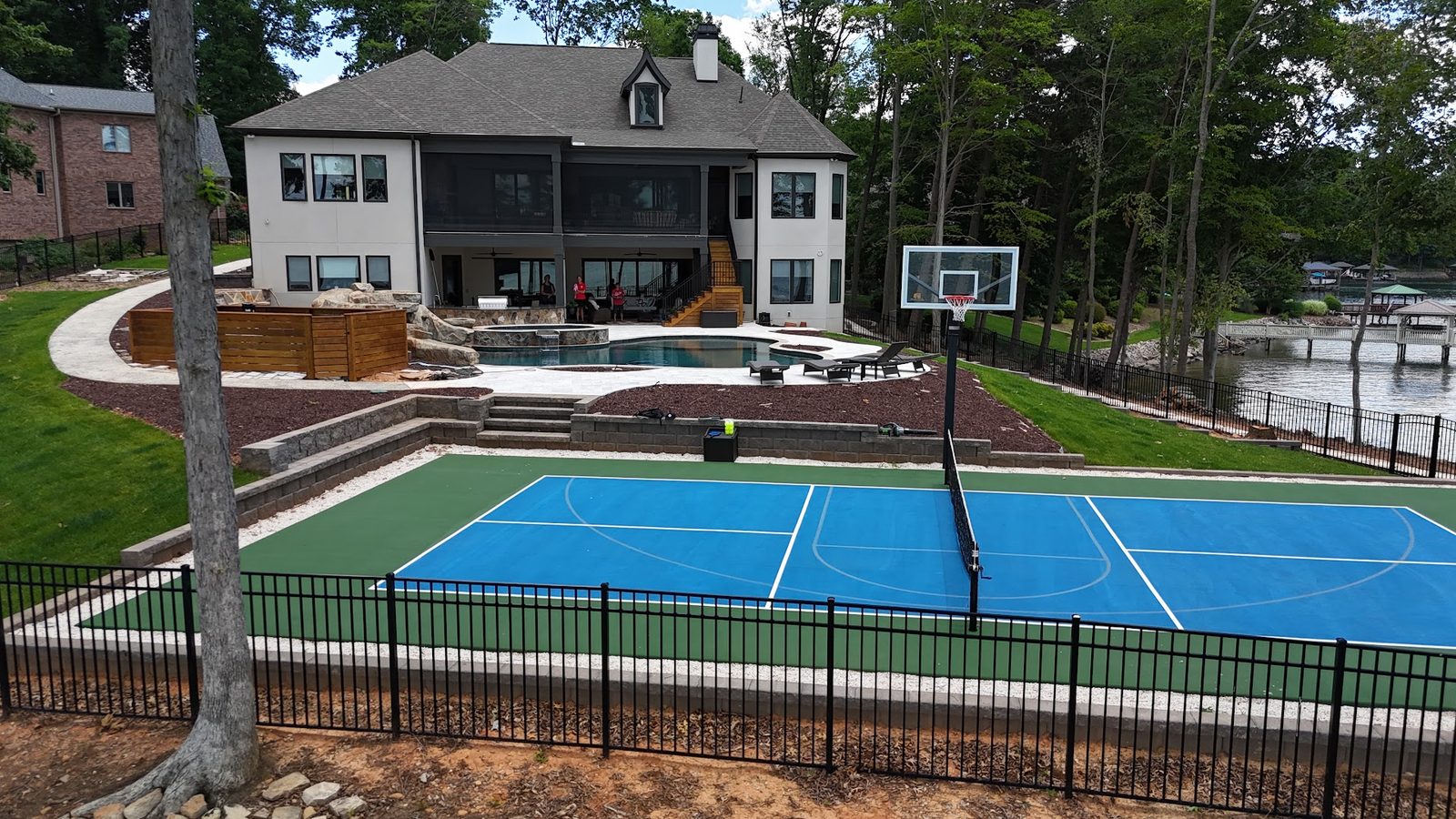
The through-line is that a waterfront job is decided before the concrete arrives. Our patios page covers what we build, and the Denver page covers the west shore specifically.
Lakefront questions.
Slope, access and water.