4.7 ★ on GoogleCarolina Custom Concrete
Lake Norman, NC · Insured concrete contractor
Concrete Resurfacing & Overlays
A new surface bonded over the slab you already have — no tear-out, no haul-away, no new sub-grade. When the concrete underneath is sound, this is the cheaper and faster answer.
InsuredFree written estimates
SureCrete systemsWallStamp · WallSpray
(704) 966-9268Call or text
What are we building?
Pick the closest match — we will get the specifics when we walk the job.
We respond in less than 2 hours
01 · When resurfacing beats replacement
Keep the slab. Change the surface.
An overlay is a cementitious surface bonded onto existing concrete. It can be broom-finished to look like a new pour, or stamped, textured and colored to look like something else entirely. What it cannot do is fix the ground underneath.
That makes the decision unusually clean. If the slab is structurally sound and the problem is the surface — staining, dullness, light spalling, a finish you have stopped liking — resurfacing is the right call, and it skips the three most expensive parts of a replacement: removal, haul-away and re-grading.
If the slab has settled, rocks underfoot, or has cracks that reopen wider each year, the ground has moved and the concrete is following it. An overlay laid over that will crack along the same lines. We will tell you which one you have, including when the answer costs us the job.
0
Slabs removed
No tear-out, no haul-away
1
Existing base
The sub-grade stays where it is
2
Broad finishes
Broom-plain through to stamped and colored
02 · Finish range
From “looks like new concrete” to “looks nothing like concrete”.
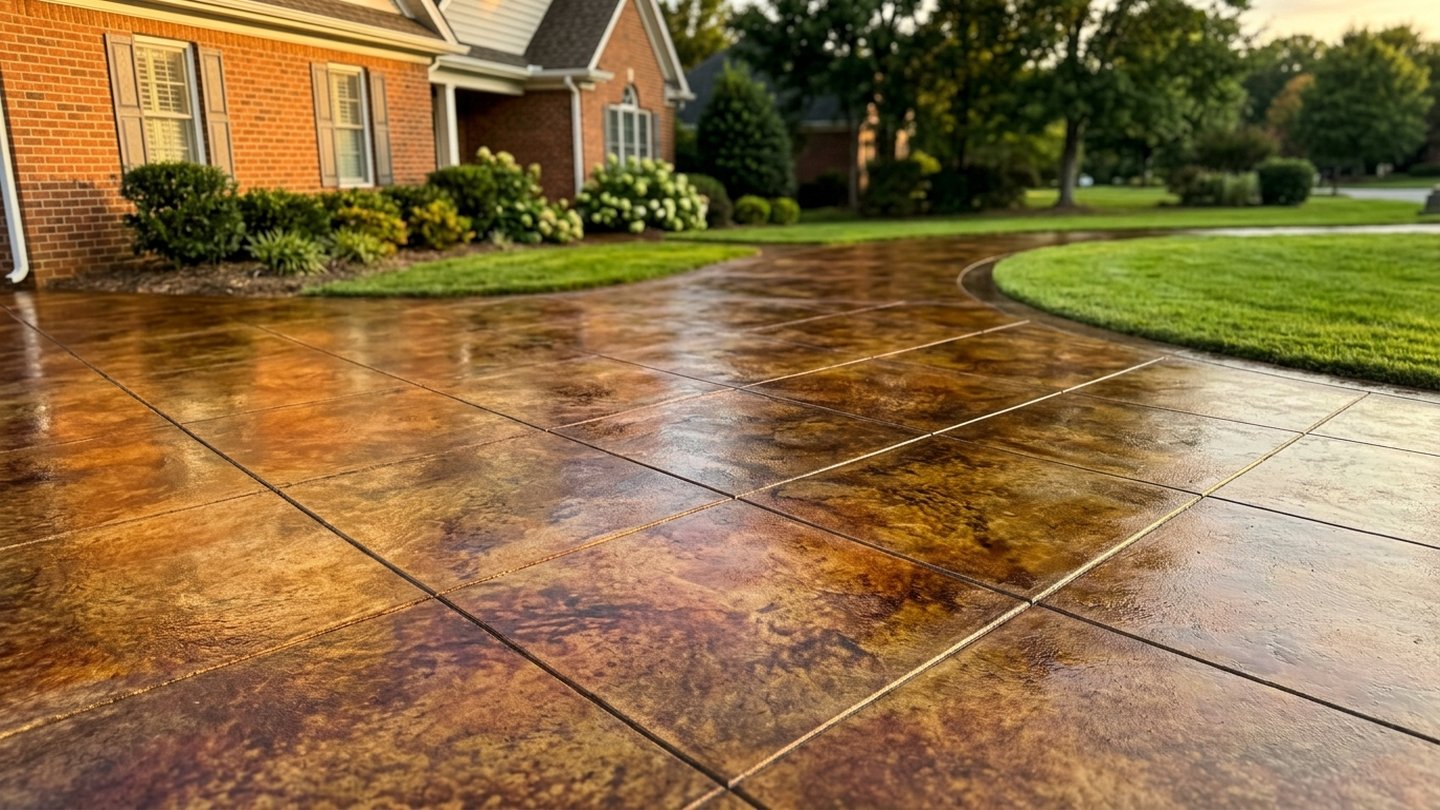
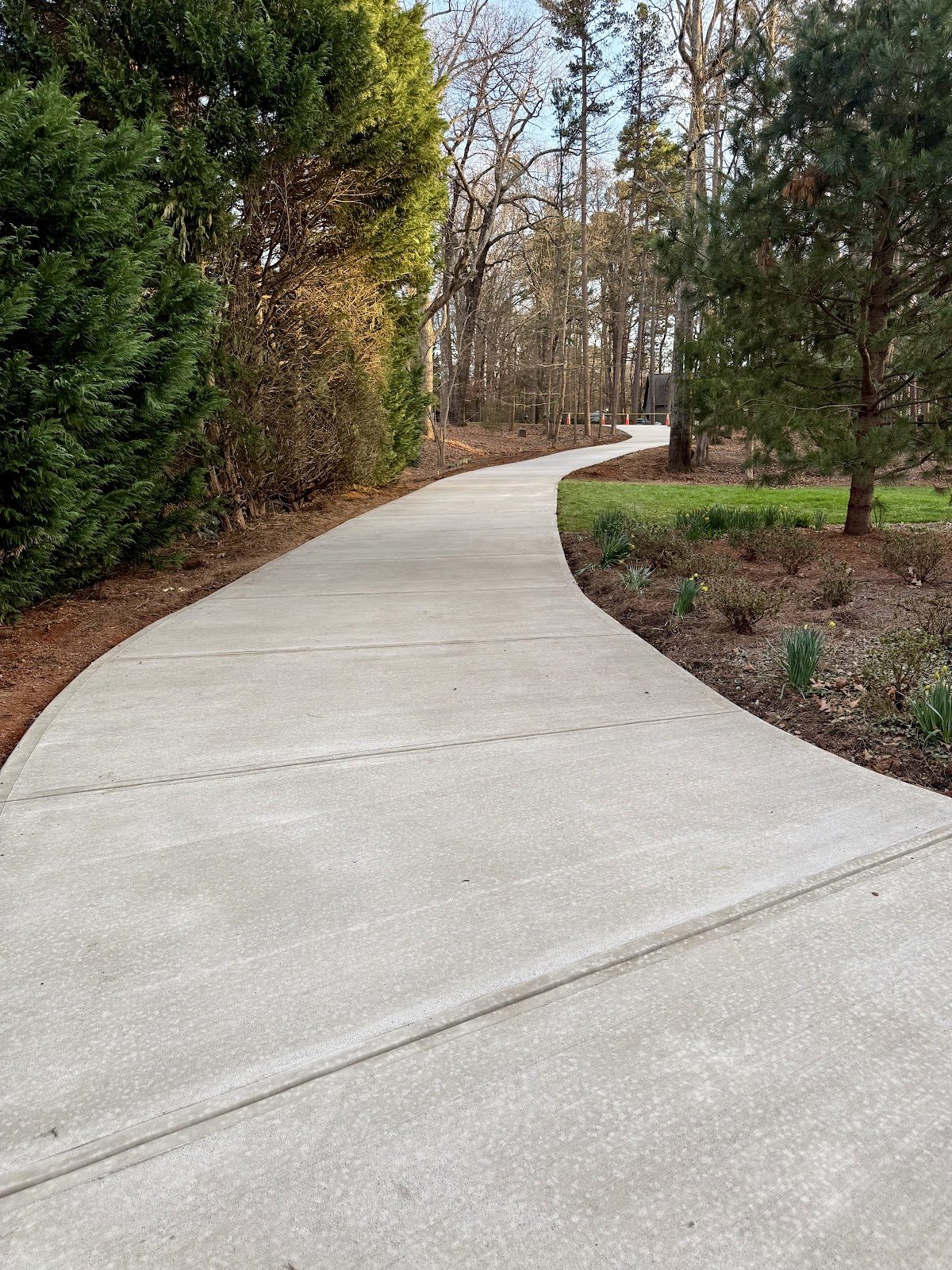
The same underlying job, finished four different ways. Which one you want changes the look far more than it changes the work.
| Finish | Reads as | Typically used on |
|---|---|---|
| Broom / plain | A clean new pour | Driveways and walkways where the goal is tidy, not decorative |
| Textured / knockdown | A worked, non-slip surface | Pool decks and patios where grip matters |
| Stamped overlay | Slate, brick, paver or stone | Patios and entrances doing visual work |
| Stained / colored | Tonal, variegated stone | Surfaces where color matters more than pattern |
Two neighbors of this work have their own pages: stained concrete, where the color goes into the slab rather than onto a new surface, and floor coatings for garage, porch and shop floors.
03 · What an overlay will not fix
The honest part of this page.
We would rather lose the job than resurface a slab that is going to move.
An overlay does not add structural capacity, does not stop settlement, and does not bridge a crack that something is still pulling open. It is a surface treatment applied to sound concrete, and applied to unsound concrete it fails in a way that looks exactly like the original problem coming back — because it is.
If what you have is movement rather than wear, the honest route is repair where the damage is local, or replacement where the sub-grade needs opening up and re-grading. Both cost more than an overlay. Both are cheaper than doing an overlay first and then doing them anyway.
04 · How we decide
Resurfacing vs replacement: how we decide
One test, done standing on the slab, settles most of it.
The sound-slab test is not complicated. We walk every panel and feel for rocking. We look at the joints for a step between neighboring panels. We check whether water sits anywhere it should be draining. And we look at every crack for width and for age — a crack with clean, sharp edges that has not widened is stable; one that is wider than it was, or has rounded, weathered edges with dirt worked into it, has been moving. If a hose is handy, water on the slab shows in a minute where the fall has gone.
A slab that passes — flat, still, draining, with only stable cracks — is a resurfacing candidate, and the finish table above is the conversation to have. A slab that fails on any one of those is a repair where the failure is local, or a replacement where it is not. The test is the same on a lake lot in Cornelius and on a north Charlotte driveway; the ground differs, the test does not.
05 · Straight answers
Resurfacing questions, answered straight.
The ones that decide whether this is your job or not.
Can any concrete be resurfaced?
No, and this is the whole decision. An overlay bonds a new surface to the slab you already have, so it inherits whatever that slab is doing. Sound concrete that simply looks tired is an excellent candidate. Concrete that has settled, heaved or cracked through because the ground under it moved is not — the new surface will crack along the same lines, usually within a season.
How is an overlay different from just painting the concrete?
Paint sits on top and wears off traffic-side first. An overlay is a cementitious material bonded to the slab that becomes part of the surface, and it can be textured, stamped or colored while it is worked. They behave nothing alike underfoot or over time.
Will the old cracks show through?
A hairline crack that is stable can be prepared and covered. A moving crack cannot — whatever is opening it is still opening it, and the overlay is thinner than the slab. When we walk it we will tell you which kind you have.
Can you resurface a pool deck?
Yes, and it is one of the better uses for an overlay, because the finish can be chosen for grip and for staying cooler underfoot than a dark, dense surface.
Does resurfacing cost less than replacing?
It costs less than taking the slab out and starting again, because the removal, the haul-away and the new sub-grade all come off the job. How much less depends entirely on the slab, which is why we look at it before quoting.
How long before we can use it?
It depends on the system and the finish. We give you the schedule for your job when it is booked rather than a general one.
06 · Free estimate
Send us a photo of the slab.
A wide shot and one close-up of the worst area is usually enough for a first opinion on whether resurfacing is realistic.
(704) 966-9268- Free written estimate
- Fully insured
- Call or text, seven days
Huntersville · Cornelius · Mooresville · Denver · Concord · North Charlotte · Troutman · Statesville