
4.7 ★ on GoogleCarolina Custom Concrete
Lake Norman, NC · Insured concrete contractor
Concrete Sealing & Cleaning Around Lake Norman
Cleaning and sealing protects color, slows staining and buys years on a surface that is otherwise fine. It is the cheapest work we do and the most often skipped. We clean and seal driveways, patios and pool decks in Mooresville, Huntersville, Cornelius and north Charlotte.
InsuredFree written estimates
SureCrete systemsWallStamp · WallSpray
(704) 966-9268Call or text
What are we building?
Pick the closest match — we will get the specifics when we walk the job.
We respond in less than 2 hours
01 · Why sealing matters here
Red clay and shallow freeze–thaw.
Two things about this region are hard on unprotected concrete, and neither is obvious until you have watched a slab age through them.
Iron-oxide staining. Cecil soil — the red clay this whole area sits on — is high in iron oxide. That is what gives it the color, and it is what leaves the rust-toned discolouration that appears on untreated concrete near beds, downpipes and anywhere runoff crosses the slab. A sealed surface does not absorb it the same way.
Shallow freeze–thaw cycling. The Piedmont does not get one long, deep winter freeze. It gets repeated shallow cycles — water gets into the surface, freezes, expands, thaws, and does it again. That cycling is what lifts and flakes the top few millimetres of a slab, and it works on the surface, which is precisely the part a sealer protects.
02 · What we clean and seal
Anything flat, and most things vertical.
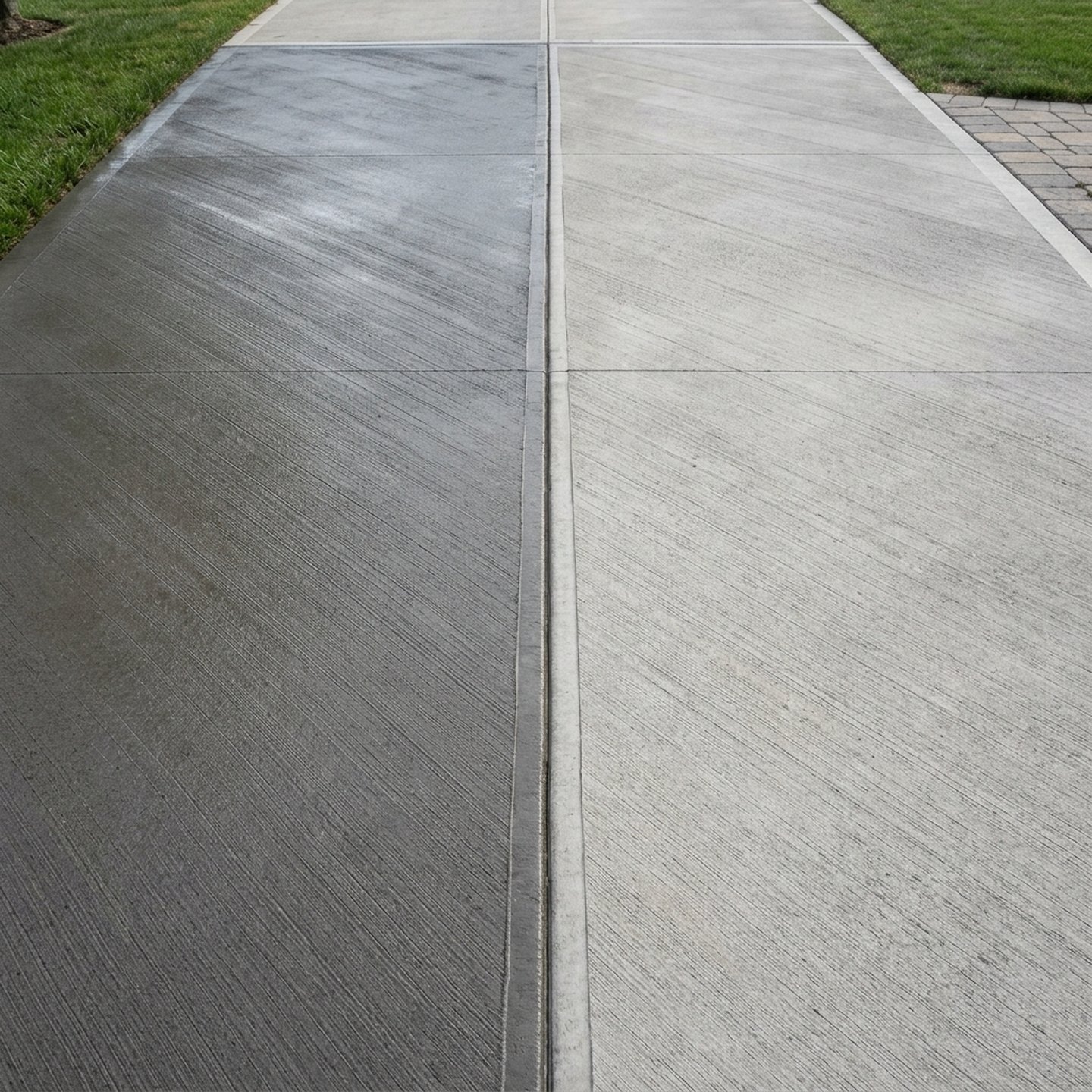
The work is the same shape every time: clean it properly first, then protect it. The cleaning is not a formality — a sealer applied over embedded dirt seals the dirt in.
| Surface | What sealing is protecting |
|---|---|
| Driveways | The surface against freeze–thaw flaking, plus oil and iron staining |
| Patios | Color and finish, and resistance to anything spilled on them |
| Pool decks | Color against chemicals and constant wetting, with grip chosen deliberately |
| Walkways & steps | High-traffic wear and the staining that collects at edges |
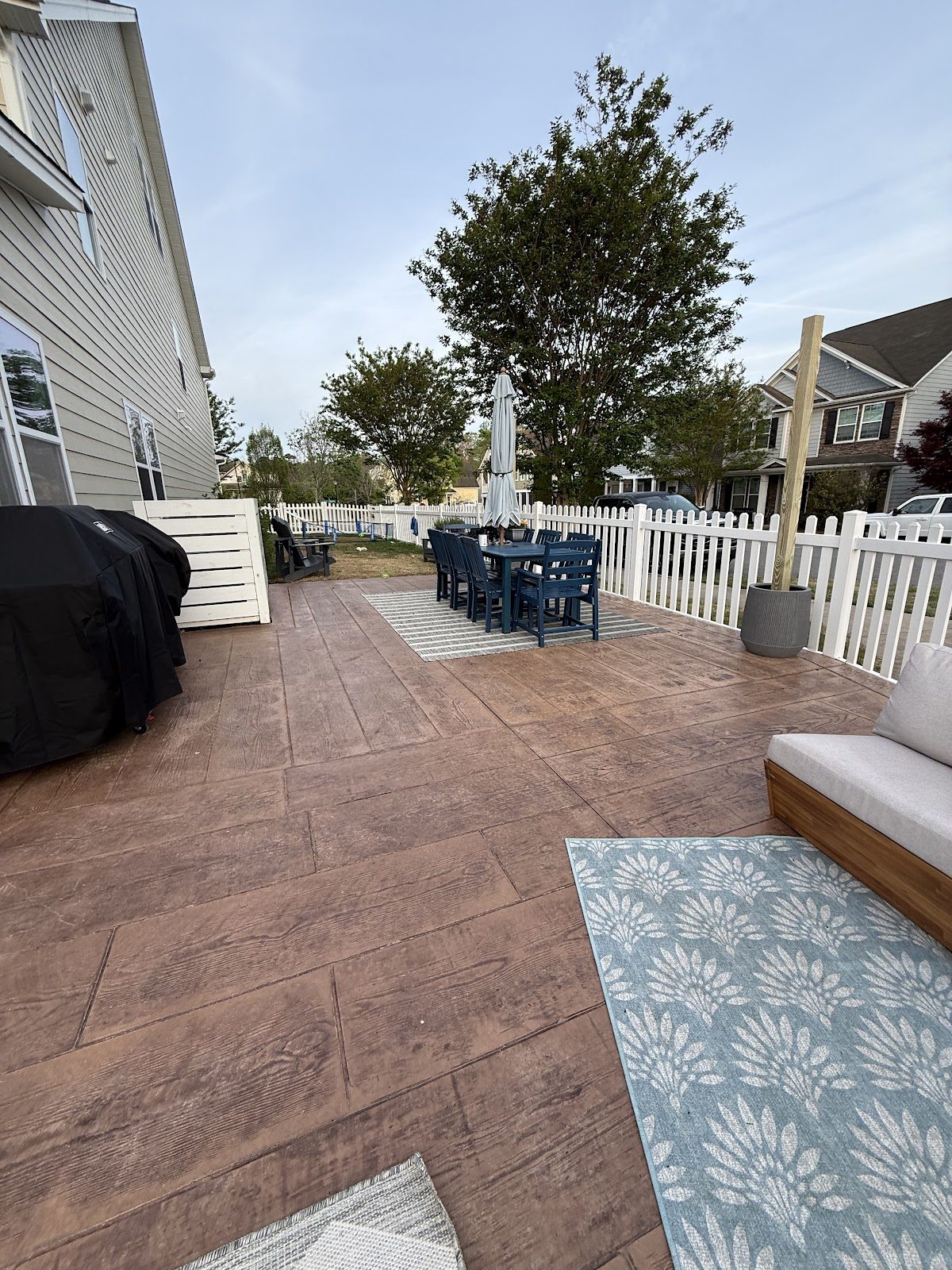
| Stamped & stained work | The pattern and the pigment, which are the expensive parts |
| Garage floors | Absorption of oil, salt and whatever comes off the vehicle |
03 · When to have it done
Sooner on new work than most people expect.
The best time to seal decorative concrete is before it has had a season to absorb anything.
New stamped and stained work is worth sealing as part of finishing it, because everything the sealer is protecting — the color, the pattern, the surface itself — is at its best on day one and never improves. On existing concrete the honest trigger is simpler: when it is dirty, when the color has gone flat, or when you can see the beginnings of surface flaking.
How often to reseal after that depends on the product on your slab, how much sun and traffic it takes, and what it is next to. We will tell you the interval for your surface rather than quote a general one, because the published advice on this contradicts itself and a number that is wrong for your slab is worse than none.
04 · Straight answers
Cleaning and sealing questions.
Including the one nobody gives a straight answer to.
Why does concrete need sealing here specifically?
Two local reasons. Piedmont red clay is high in iron oxide, which is what leaves the rust-colored staining you see on untreated concrete around here. And this region gets shallow, repeated freeze–thaw cycling rather than one long freeze, which is the pattern that lifts and flakes the top few millimetres of an unprotected slab.
How often should concrete be resealed?
This depends on the sealer used, the exposure and how the surface is used, and published advice varies widely. We will give you the interval for the product actually on your slab rather than a number off a chart.
Will sealing change how the concrete looks?
Usually yes, to some degree. Sealers range from matte to a noticeable sheen, and most deepen the color of decorative work. If you want the surface protected without changing its appearance much, say so — that narrows the product choice.
Can you seal stamped and stained concrete?
Yes, and decorative work benefits most, because the sealer is protecting color and pattern as well as the concrete itself.
Does sealing make a pool deck slippery?
It can, which is why grip is chosen alongside the sealer rather than after it. Around a pool we would rather discuss the finish before the product.
Can you clean concrete that is already stained?
Often. Cleaning is the first step of the job anyway, and how much of the existing staining lifts depends on what caused it and how long it has been there. We will tell you what we expect to be able to get out before we start.
05 · Free estimate
Ask about cleaning and sealing.
It is the smallest job on this website and often the one that saves the most. Tell us what surface you have.
(704) 966-9268- Free written estimate
- Fully insured
- Call or text, seven days
Huntersville · Cornelius · Mooresville · Denver · Concord · North Charlotte · Troutman · Statesville