
4.7 ★ on GoogleCarolina Custom Concrete
Lake Norman, NC · Insured concrete contractor
Stained Concrete & Acid Stains
Color that becomes part of the concrete rather than sitting on it — acid stains that react with the slab, water-based stains and dyes for a wider palette — on patios, porches, driveways and interior floors around Lake Norman and north Charlotte. Free written estimates.
InsuredFree written estimates
SureCrete systemsWallStamp · WallSpray
(704) 966-9268Call or text
What are we building?
Pick the closest match — we will get the specifics when we walk the job.
We respond in less than 2 hours
01 · What staining does
Color in the slab. Not painted on.
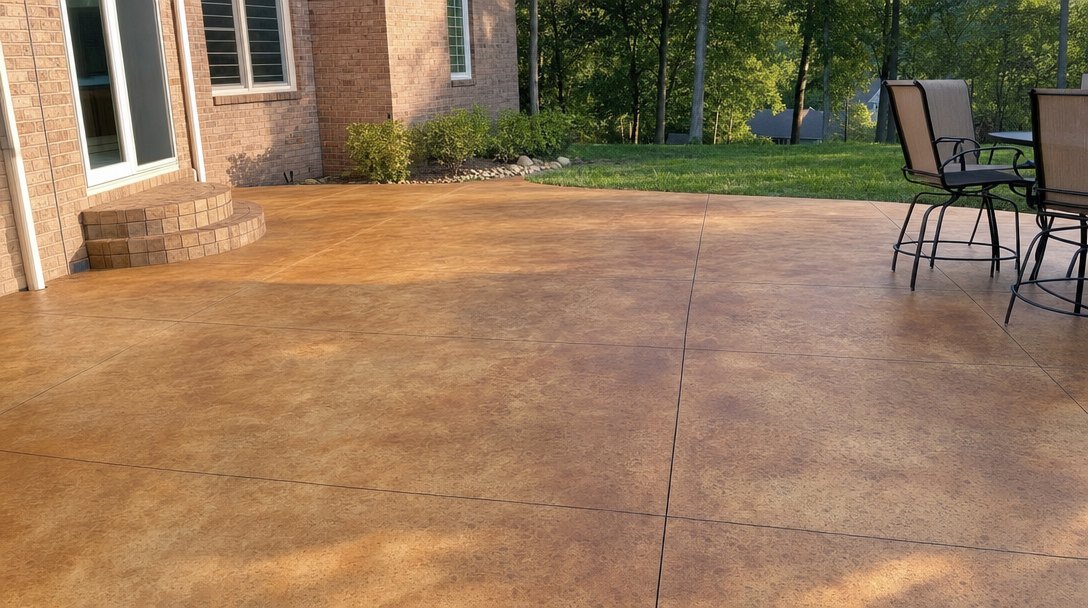
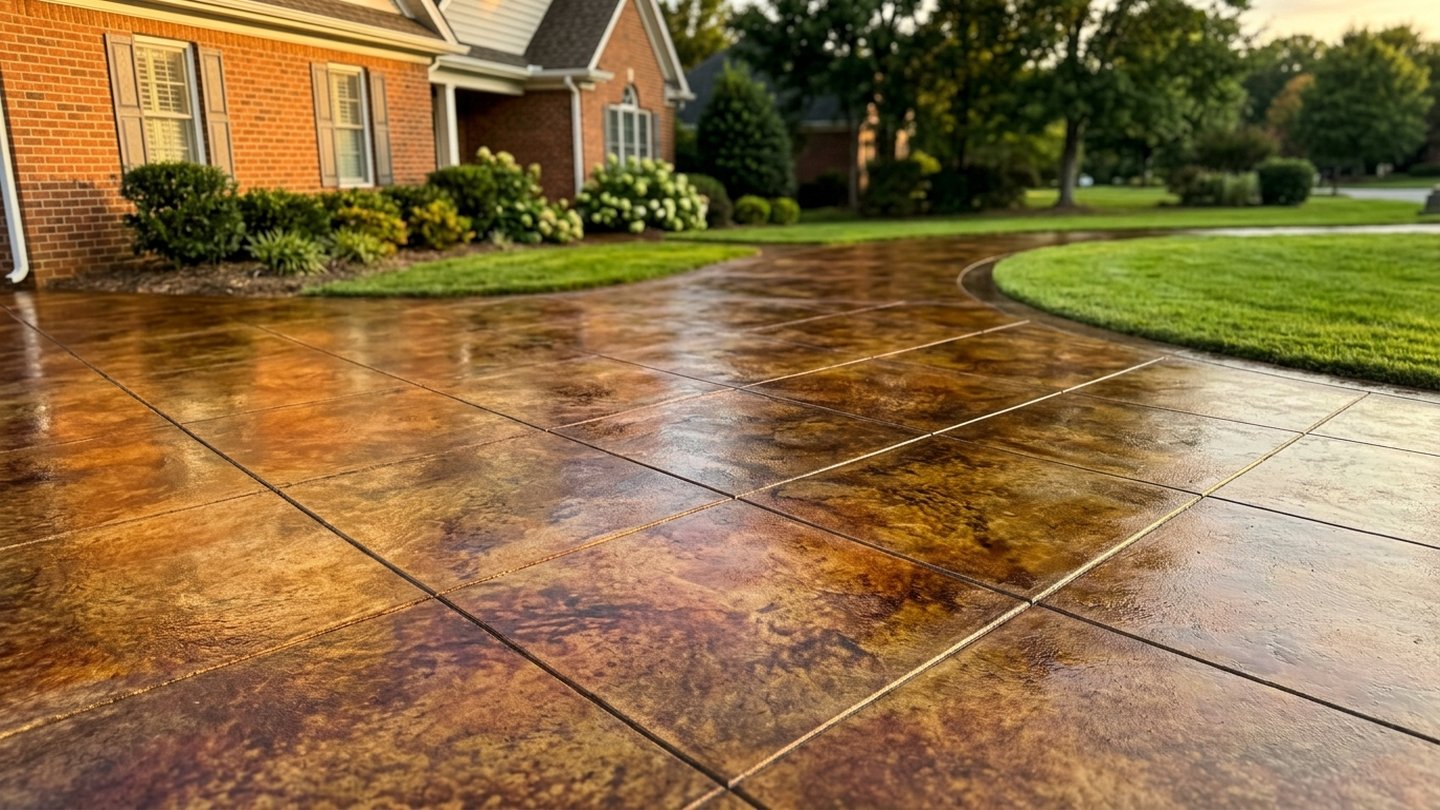
An acid stain is a mild acid solution carrying metallic salts. It reacts with the lime in the concrete and leaves a permanent, variegated color that sits in the surface rather than on top of it, which is why a stained slab does not chip, flake or wear through the way a painted one does. The palette is earth tones: tans, browns, terracottas, blue-greens.
Water-based stains and dyes work differently. They do not react with the slab; they penetrate and color it, which gives a far wider range of color and a more even result. Both are usually combined with saw-cut score lines that turn a plain slab into a tile grid or a pattern, and both are finished with a sealer that brings the color up and protects it.
What staining cannot do is change the concrete. Every patch, trowel mark, old crack and change of pour shows through, because the stain is reacting with whatever is there. On a new pour that is a design tool. On an old slab it is a conversation to have before the first drop goes down.
2
Stain families
Acid-reactive and water-based
0
Layers to peel
The color is in the surface
4.7
Stars on Google
Across 52 reviews
02 · The options
Acid stain, water-based stain, dye or integral color.
Four ways to put color in concrete. They are chosen for different reasons and they age differently, which matters more than how they look on day one.
| Method | How it works | What it is good for |
|---|---|---|
| Acid stain | Reacts with the slab; variegated earth tones, permanent | Patios, porches and floors where a natural, mottled stone look is wanted |
| Water-based stain | Penetrates without reacting; wider palette, more even | Surfaces where a specific color or a consistent tone matters |
| Dye | Very fine pigment carried deep into the surface; strongest colors | Interior floors, often over polished or densified concrete |
| Integral color | Pigment mixed through the batch before the pour | New pours where the color has to go all the way through; see stamped work |
On a new pour, integral color and a stain are often combined: color through the mix, then a stain or release to give it depth. That is the pairing most stamped concrete uses, and the design guide covers what each choice commits you to.
03 · Where it works
Patios, porches, driveways and floors.
Staining suits a surface that is sound and that you want to keep. It is not a way of hiding a slab you should be replacing.
Patios and porches are the most common staining jobs: a plain gray slab, scored into a grid and stained in two or three tones, reads as something built rather than poured. Driveways can be stained, and the saw-cut grid helps control where the slab cracks as much as it helps the look; the sealer schedule is the thing to plan for on a surface that carries cars. Interior floors, in basements, garages and workshops, are where dyes and water-based stains come into their own, often under a clear coating or a densifier.
Around Lake Norman the local variable is red clay. Cecil clay staining on a light slab is the reason most people end up wanting color in the first place, and it is the reason a stained surface has to be sealed and resealed on a schedule. Our cleaning and sealing page covers why the interval here is shorter than the national guidance implies.
04 · What stain will not hide
The honest part of this page.
Stain reveals a slab. It does not disguise one.
Every patch, every trowel arc, every old crack and every place a previous sealer or paint has soaked in will take the stain differently, and the finished floor will show it. On a slab with a history, the honest options are to embrace the variation, to use an opaque water-based stain that evens it out, or to put an overlay down first and stain that. We will tell you which one your slab is, standing on it, before anything is quoted.
A stained surface also needs a sealer, and the sealer is the part that wears. Traffic, sun and the clay work on it, so a stained patio or drive has a resealing interval the way a stamped one does. It is a real running cost and it is on the estimate.
05 · Straight answers
Stained concrete questions, answered straight.
The ones that decide whether this is your job or not.
What is the difference between acid stain and water-based stain?
Acid stain reacts chemically with the lime in the concrete and leaves permanent, variegated earth tones; no two slabs take it the same way. Water-based stain penetrates and colors the surface without reacting, so it comes in a far wider range of colors and gives a more even result. Both are sealed afterwards.
Can an old patio or driveway be stained?
Often, if the concrete is sound. The catch is that stain shows everything: patches, old crack repairs, trowel marks and any previous sealer or paint that soaked in. On a slab with a history we look at it first and tell you whether the variation will read as character or as a mess; sometimes the right answer is an overlay first, then the stain.
Does stained concrete fade?
Acid stain is a reaction in the concrete, so the color itself is permanent. What wears is the sealer over it, and an unsealed or worn-sealer surface will look dull and take clay staining. Resealing on a schedule keeps the color up; that interval is on your estimate.
Can you stain concrete inside the house?
Yes. Basements, garages and workshop floors take stains and dyes well, and interior floors are where the wider color range of dyes comes into its own. Moisture coming through the slab is checked first, as it is for any coating.
Is stained concrete slippery?
The stain itself does not change the texture. The sealer can, so on a patio, pool surround or step the sealer is chosen or textured for grip. Say where the surface is and we will spec it for that.
How is this different from stamped concrete?
Stamping changes the texture of the surface while it is wet; staining changes its color, on a new pour or an old one. Most stamped work uses color as well, and many stained jobs use a saw-cut grid instead of a stamp. The stamped concrete page and the design guide cover the pairing.
06 · Related guides
Keep reading.
07 · Free estimate
Send us a photo of the slab.
A wide shot and a close-up of any patches or cracks is enough for a first opinion on whether staining is the right job for it.
(704) 966-9268- Free written estimate
- Fully insured
- Call or text, seven days
Huntersville · Cornelius · Mooresville · Denver · Concord · North Charlotte · Troutman · Statesville