4.7 ★ on GoogleCarolina Custom Concrete
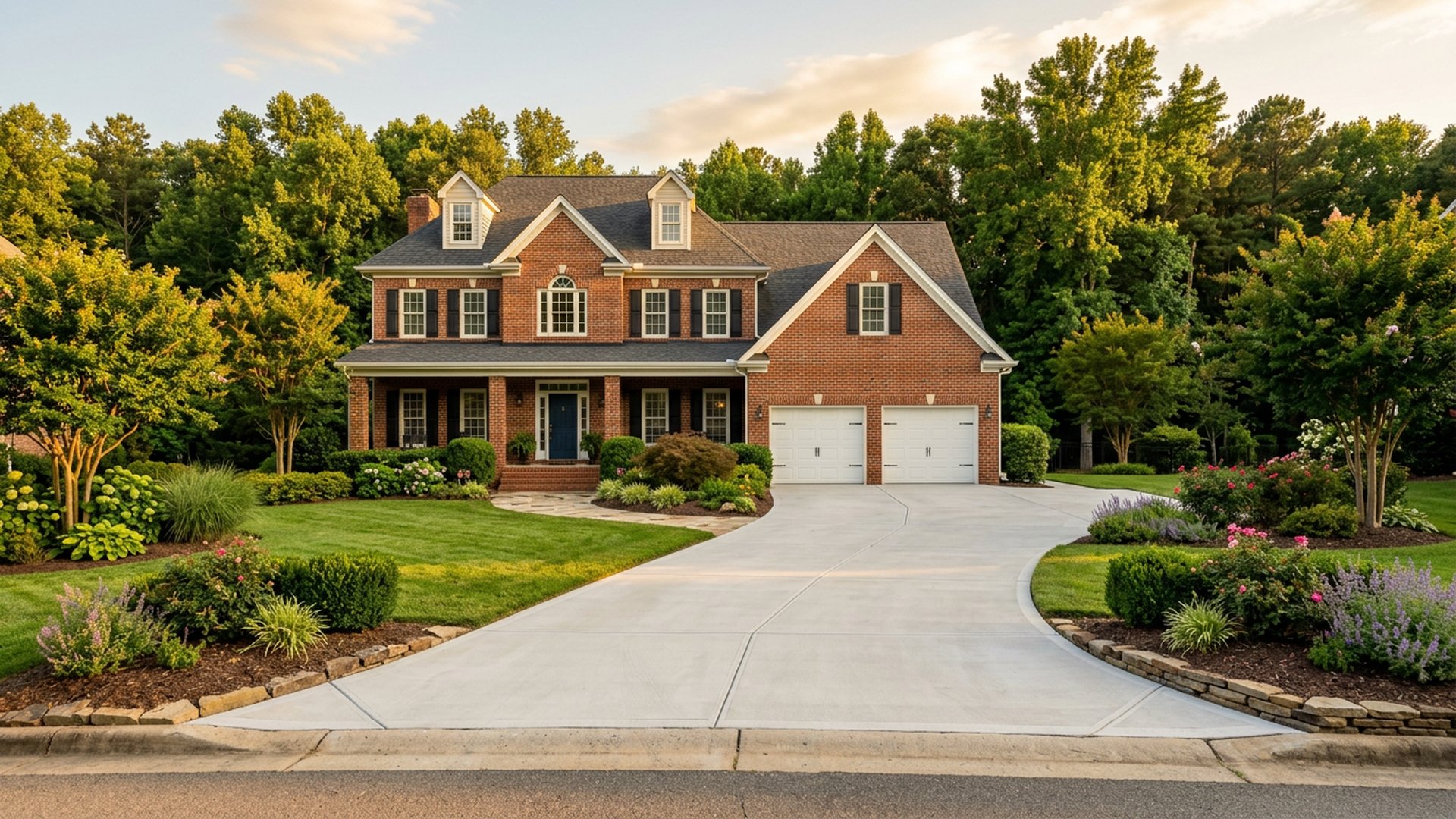
Lake Norman, NC · Insured concrete contractor
Concrete Driveway Replacement & Extensions
Replacing worn-out driveways is the work we do most, and it is the job a concrete driveway replacement contractor exists for. Removed precisely, re-graded, re-poured — and the old slab gone the same day it comes up. Free written estimates.
InsuredFree written estimates
SureCrete systemsWallStamp · WallSpray
(704) 966-9268Call or text
What are we building?
Pick the closest match — we will get the specifics when we walk the job.
We respond in less than 2 hours
01 · When a driveway is past repair
Past patching, past pretending.
Patching buys a season on a slab that is still moving. The question is never how bad the surface looks — it is whether the ground underneath is still holding the concrete up.
Sunken sections, panels that rock underfoot, cracks that reopen wider each year after being filled, and edges that have dropped away from an apron all point the same way: the sub-grade has moved and the slab is following it. Surface spalling and staining on a slab that still sits flat is a different problem, and usually a cheaper one — that is a resurfacing conversation, not a replacement.
We will say which one you are looking at when we walk it, including when the answer is that a repair will hold and a replacement is not worth your money yet.
4.7
On Google
Carolina Custom Concrete.
8
Towns
Huntersville through Statesville.
1
Crew
The people who quote it do it.
02 · How we replace a driveway
Four jobs, not one
A replacement is a removal job, an earthworks job, a formwork job and a pour — in that order, and the first three decide whether the fourth lasts.
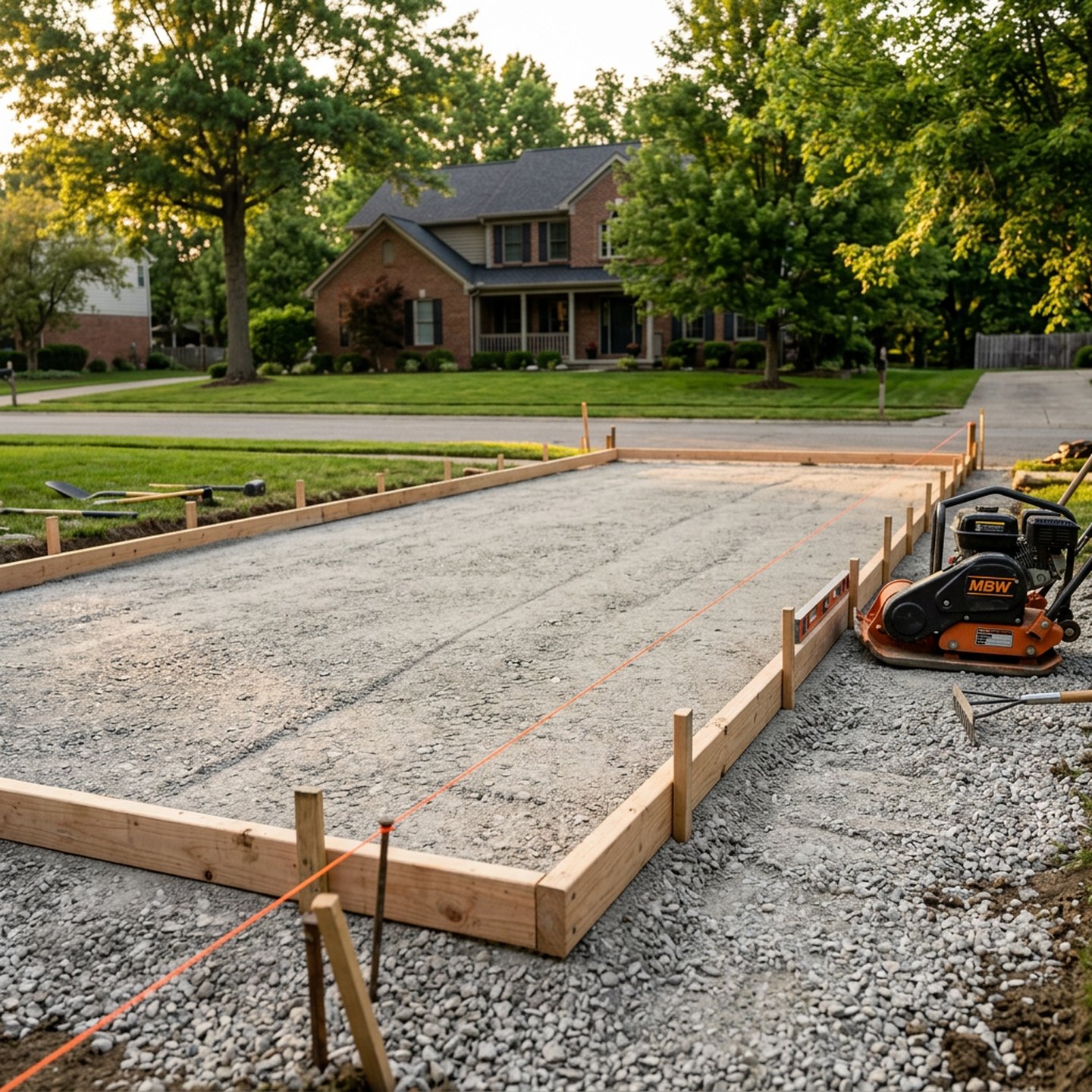
The old slab comes out first and goes straight onto a trailer, because a driveway full of broken concrete is not a place anyone can work. Then the sub-grade gets cut back to where it should have been — which is the step most often skipped, and the reason a new slab poured onto old fill fails the same way the last one did.
Forms are set and squared against the house, the apron and whatever the drive has to meet at the street. Only then is concrete ordered. Somebody from the crew walks the job with you from the estimate through to the finished install, so the person who quoted it is the person who answers for it.
When the concrete is ordered is a weather question as much as a calendar one, because an opened-up sub-grade has to be dry enough to compact before anything is poured on it. What moves a pour date around heat, rain and cold nights covers why a replacement date is given as a week rather than an hour.
Control joints are cut and spaced deliberately, so the hairlines that every slab eventually develops land in the joints instead of wandering across the middle of the drive.
03 · Selected work
The tear-out, step by step
Four separate jobs, photographed as they happened. These are not a matched before-and-after of one driveway — we will not imply that two photographs are the same address unless they are.
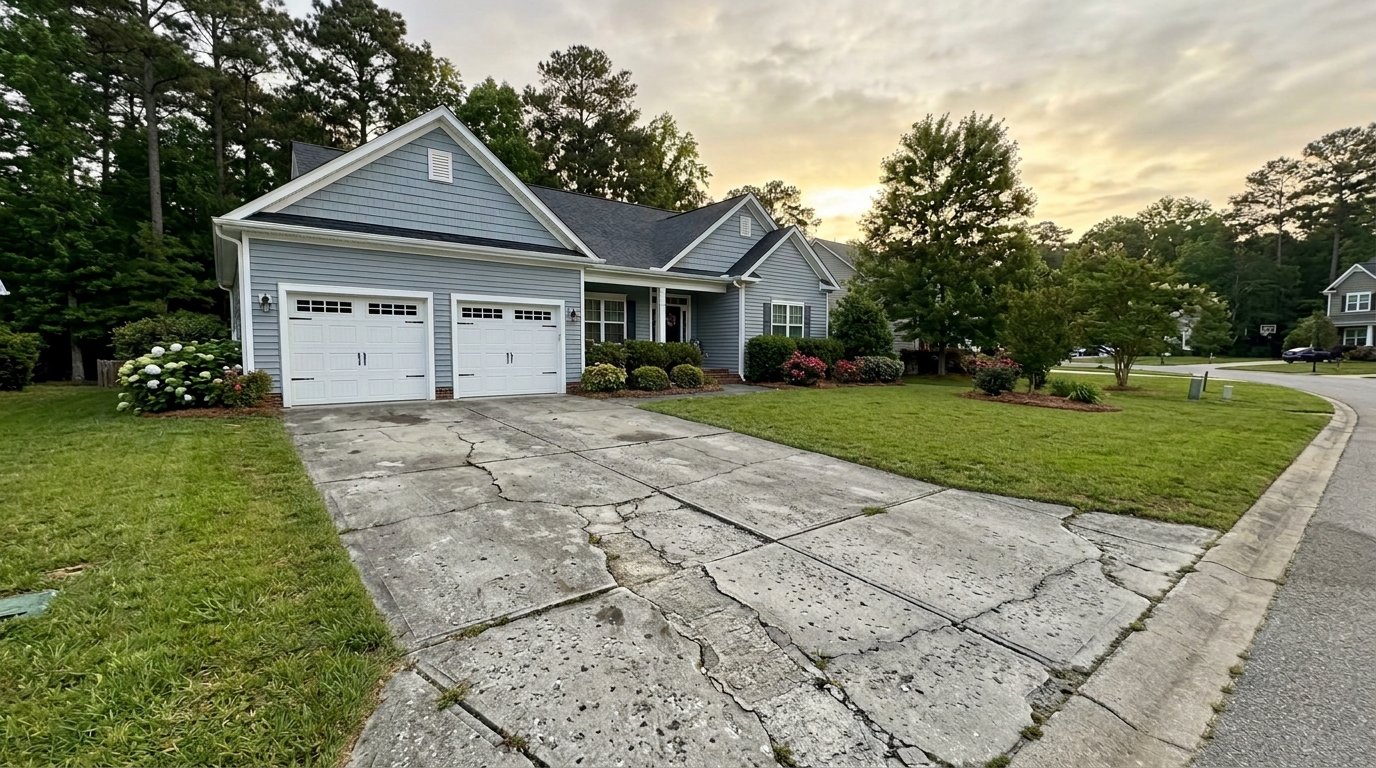
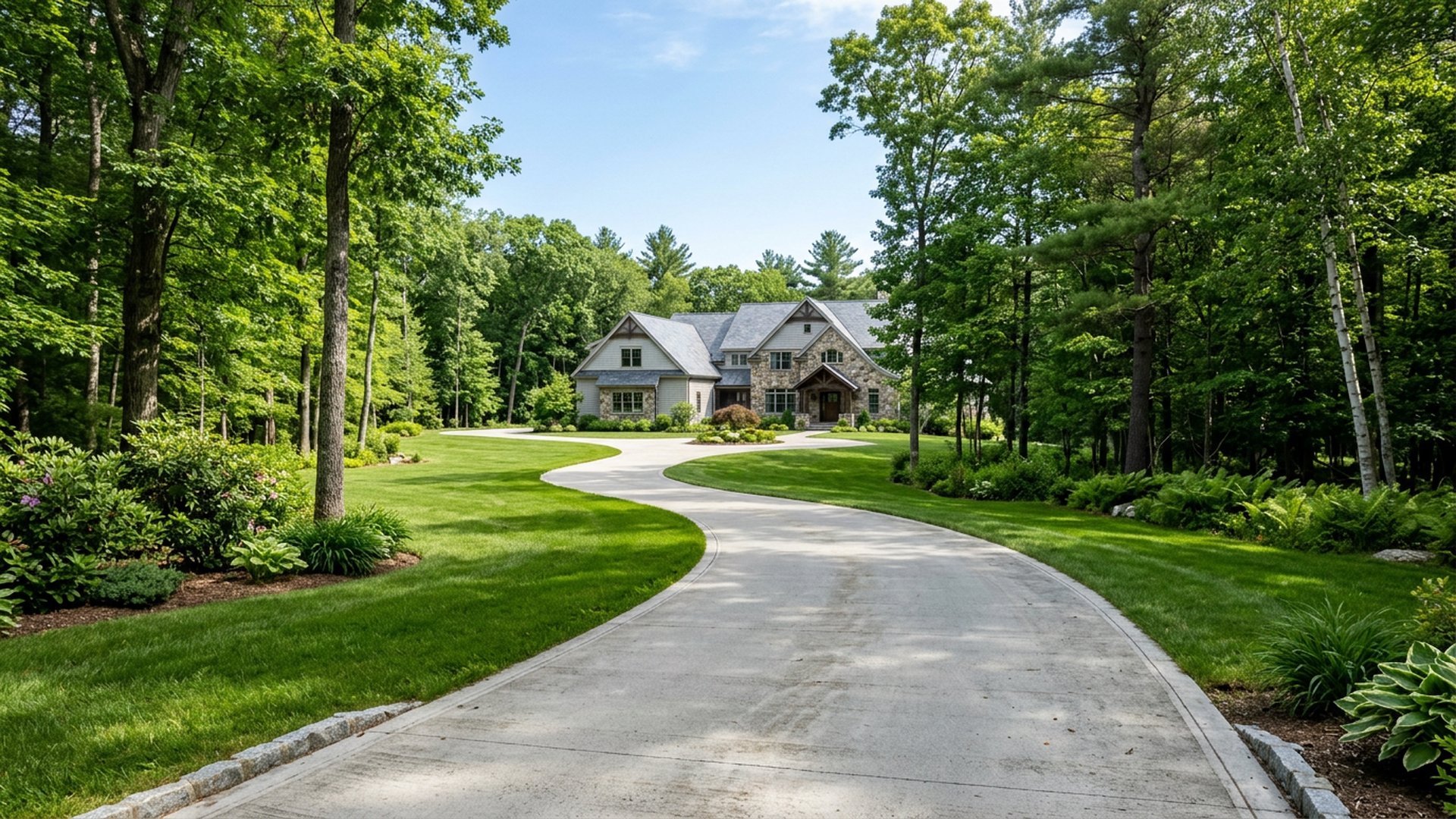
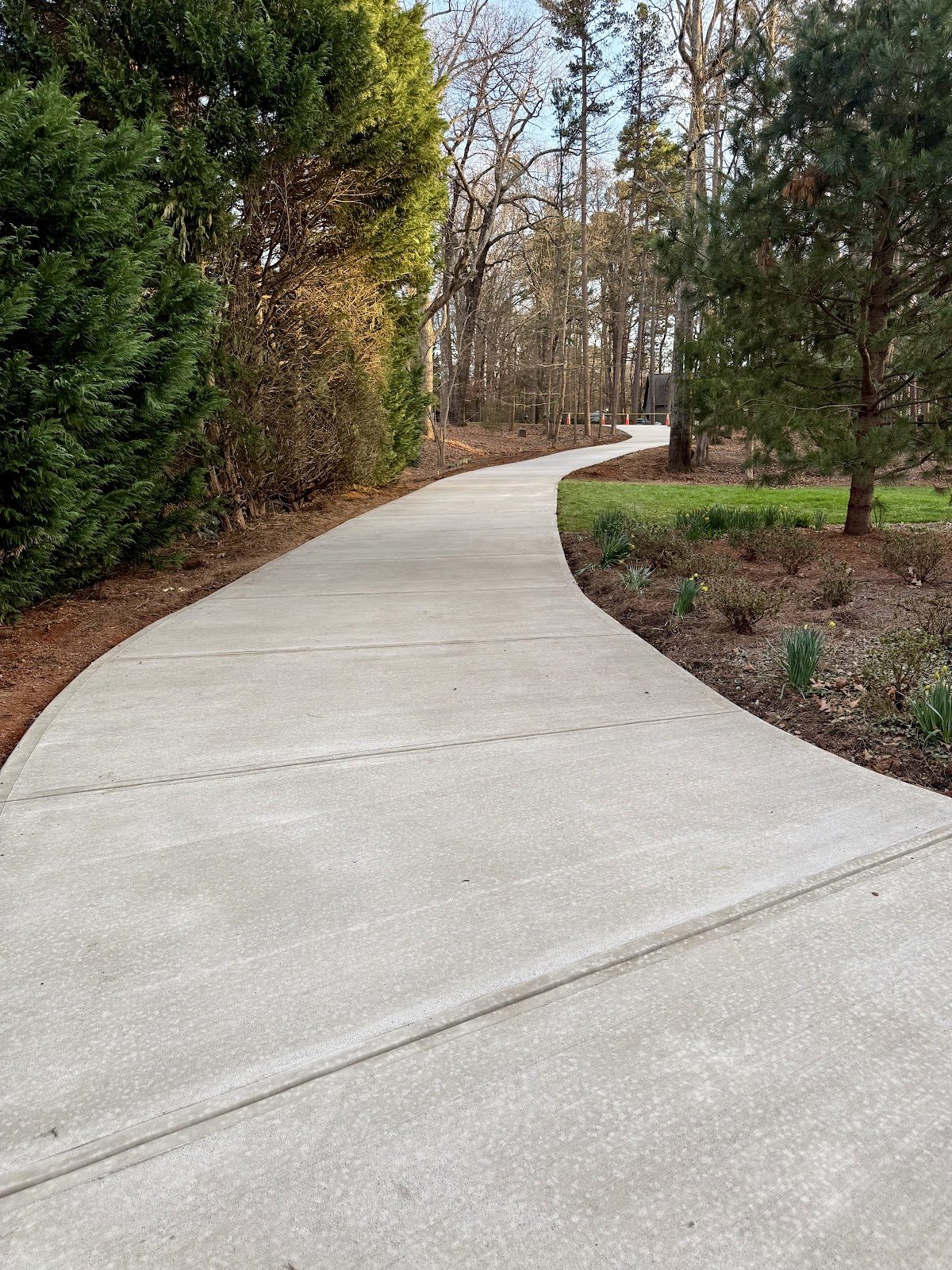
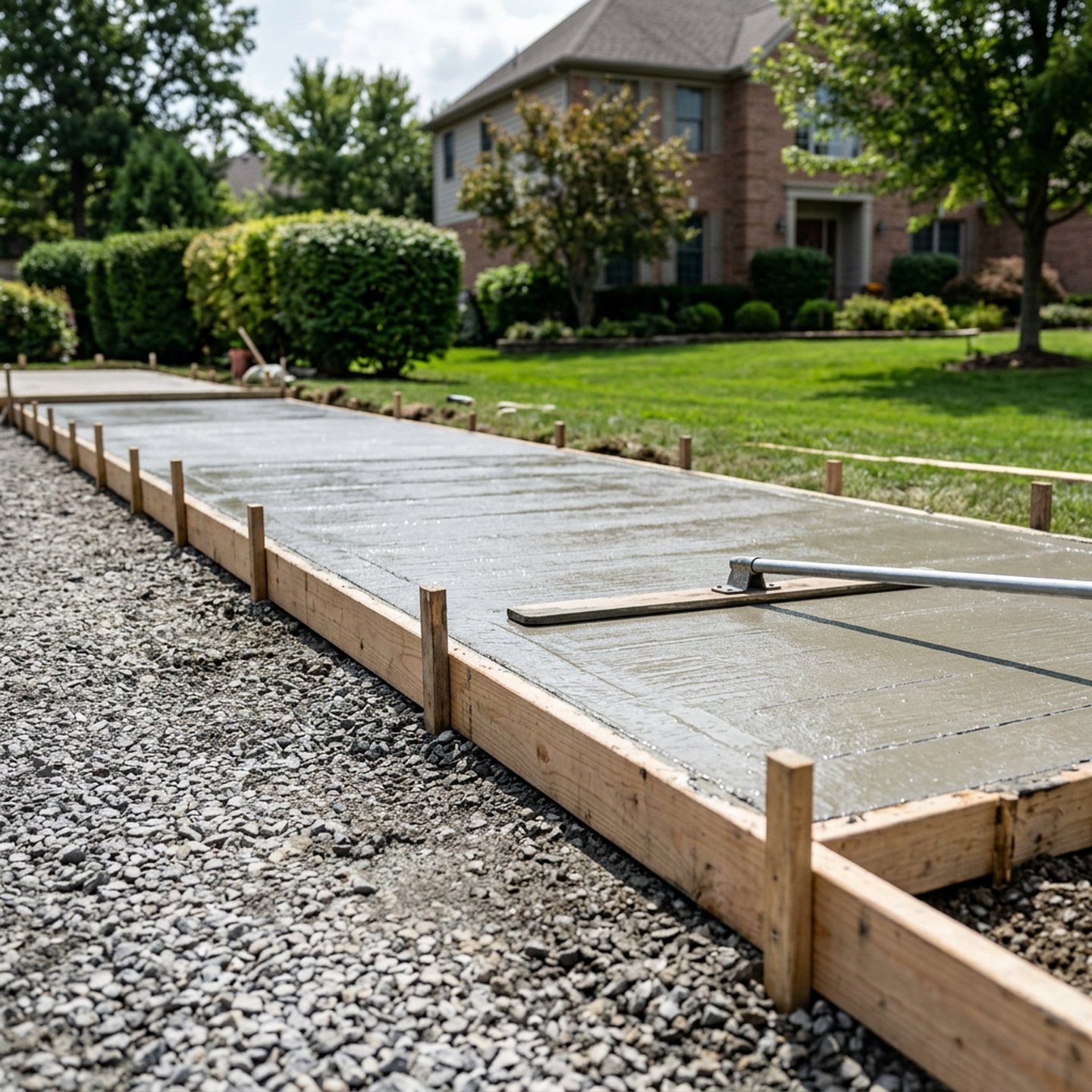
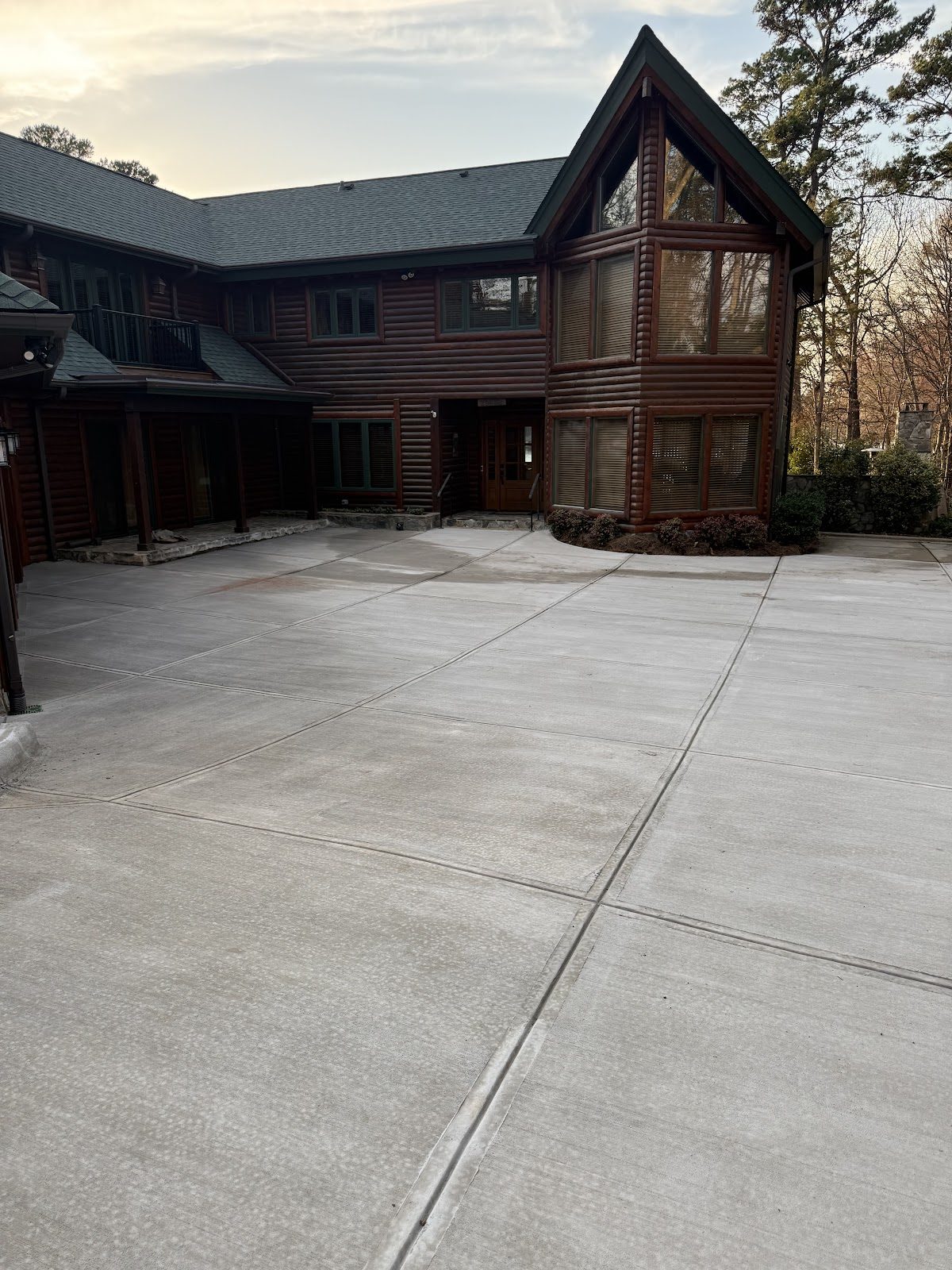
Tear-out to finished slabHuntersville · Cornelius · Davidson · Mooresville · Denver
04 · Driveway extensions
More room without starting over
Widening an existing drive, adding a parking pad or a turnaround, or squaring off a corner that never worked — extensions are a published specialty and a common reason people call.
Extensions are their own small problem. New concrete placed against an old slab has to be tied in and jointed so the two move independently instead of fighting each other, and the tone will never match exactly — new concrete is lighter, and it stays lighter for a long time. We will show you what that looks like before you commit, rather than after.
Where the extension meets the street, the same NCDOT rule applies as for a new drive.
05 · Built for this ground
Lake Norman sits on red clay.
Cecil soil is the North Carolina state soil and it runs under most of this county. It swells wet and shrinks dry, and the Piedmont gets dozens of shallow freeze–thaw cycles a winter rather than one long freeze. Concrete that ignores both telegraphs it within two seasons.
The base
The base carries the slab
Clay moves; a compacted aggregate base does not. It is graded to drain so water runs off the sub-grade instead of collecting under the pour and softening it.
Compacted base · graded to drain
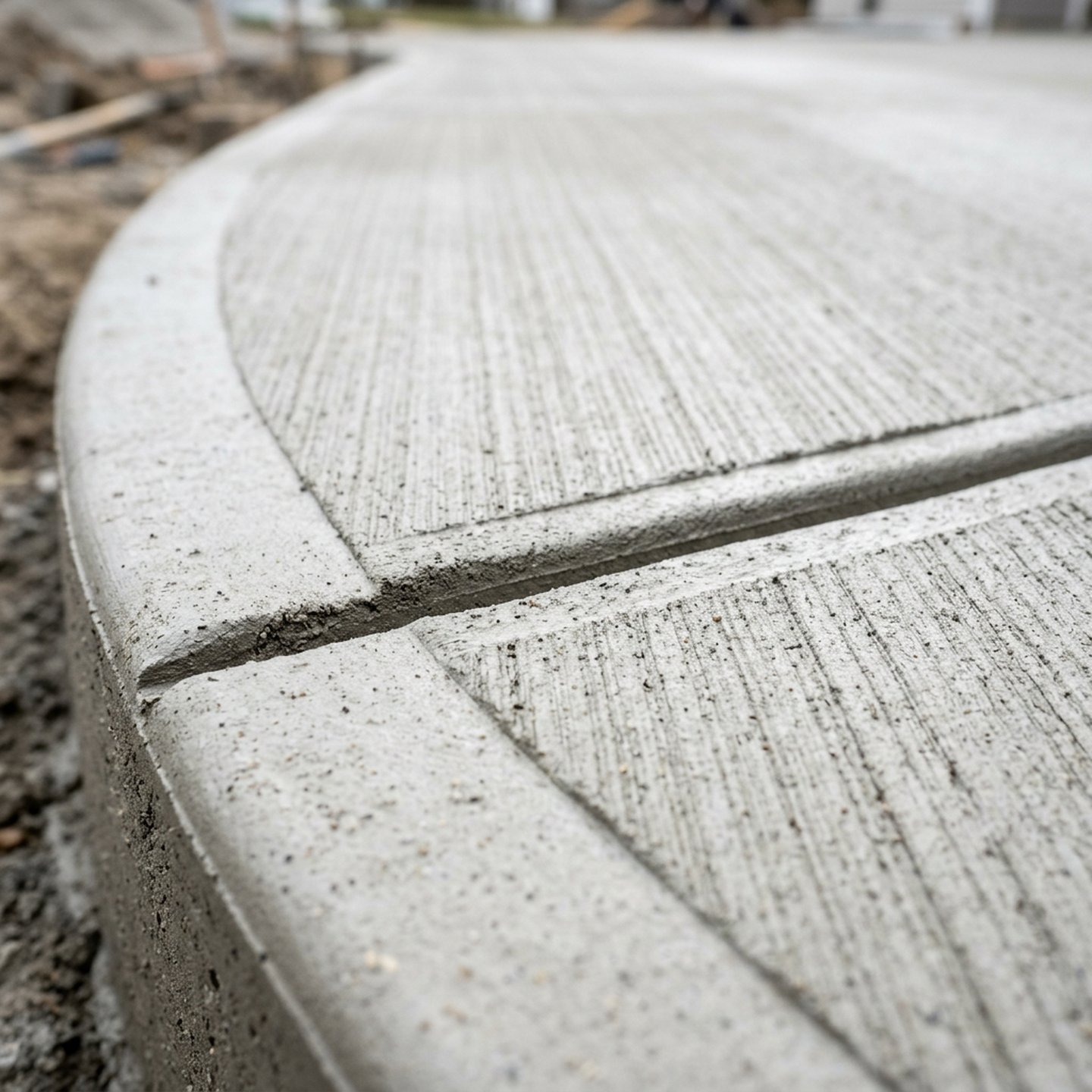
The joints
Cracks go where we cut them
All concrete moves. Control joints decide where it opens. Cut and spaced deliberately, the hairlines land in the joints instead of across the middle of a driveway.
Sawcut & tooled control joints
The tie-in
Where it ties in matters
Aprons and street tie-ins take the most abuse and the most water. A connection to a state-maintained road needs an NCDOT driveway permit — worth knowing before you plan a new entrance.
NCDOT permit · new or altered access
06 · Straight answers
Replacing a driveway, answered.
The questions that come up on nearly every site walk, answered the way we answer them in the driveway.
| Factor | Why it moves the number |
|---|---|
| Tear-out | Removing and hauling an old slab is a separate job from pouring a new one. A first-time pour on open ground costs less than a replacement of the same size. |
| Access | Whether a truck can reach the pour. Wheelbarrowing concrete round a house is hours of labor a chute does in minutes. |
| Sub-grade | What is under it. Soft or wet clay has to be cut back and rebuilt before anything is poured on top. |
| Finish | Broom is the baseline. Stamped, stained and exposed add material and labor. |
| Tie-ins | Aprons, street connections and steps. A new or widened entrance onto a state road also needs an NCDOT permit. |
How long does a driveway replacement take?
Most residential replacements run over a few working days: tear-out and haul-away, then excavation and grading, then forms and the pour. Weather and the size of the drive move it. We give you the schedule for your job when it is booked.
Can you pour new concrete over my existing driveway?
Only when the slab underneath is sound. If it is structurally fine and simply looks tired, an overlay bonds a new surface over it with no tear-out. If it has settled, heaved or cracked through because the ground beneath it moved, an overlay will crack again along the same lines — that one needs replacing.
Do you haul the old concrete away?
Yes. Removal and haul-away are part of the job, and keeping the street clear while it happens is part of doing it properly.
Will you damage my lawn or my existing apron?
Removing an old slab precisely, with as little disturbance as possible, is something we make a point of. Machines still need a path in, so we walk that route with you before anything starts.
Can you pour in winter?
The Piedmont pour season runs roughly March to November. Concrete can be placed in cold weather with the right precautions, but the shallow freeze–thaw cycling here is exactly what damages a slab that was not protected while it set. We will tell you honestly whether to wait.
What makes one quote higher than another?
Tear-out versus a first-time pour, whether a truck can reach the work, what the sub-grade is like once it is opened up, the finish, and any street or apron tie-ins. We price per site rather than off a chart.
Do I need a permit?
For a connection to a state-maintained road, yes — that needs an NCDOT driveway permit. Local requirements vary by town and by whether you are replacing in place or cutting a new entrance.
07 · Tear-out to finish
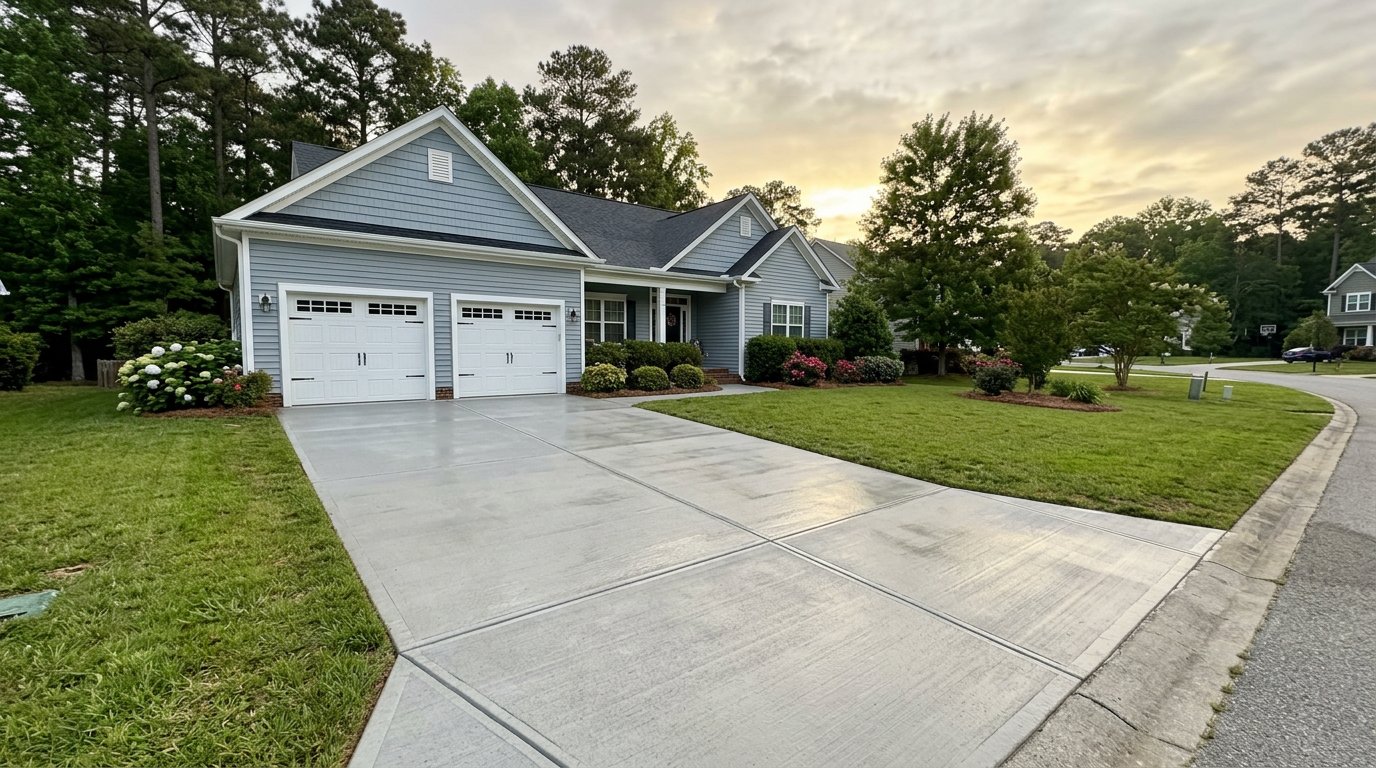
Drag the line.
What a replacement changes at the curb: the same scene, before and after. Drag to compare.
07 · In their words
Replacements, reviewed.
Quoted word-for-word from Google reviews of our work — 4.7 across 52 reviews.
“It was a big job (over 5,000 square feet) & they finished it in 3 days. They worked continuously from early in the morning until past 5 at night, and Jeremy kept me in the loop about what to expect.”
“Even after the work was completed, Jeremy continued to follow up to ensure we were satisfied. We’ve received numerous compliments from neighbors who have also requested Jeremy’s contact information.”
08 · Related guides
Keep reading.
09 · Free estimate
Tell us what you are replacing.
Send the short version and we will call to arrange a site walk — including when the honest answer is that a repair will hold and a replacement is not worth your money yet.
(704) 966-9268- Free written estimate
- Fully insured
- Call or text, seven days
Huntersville · Cornelius · Mooresville · Denver · Concord · North Charlotte · Troutman · Statesville