
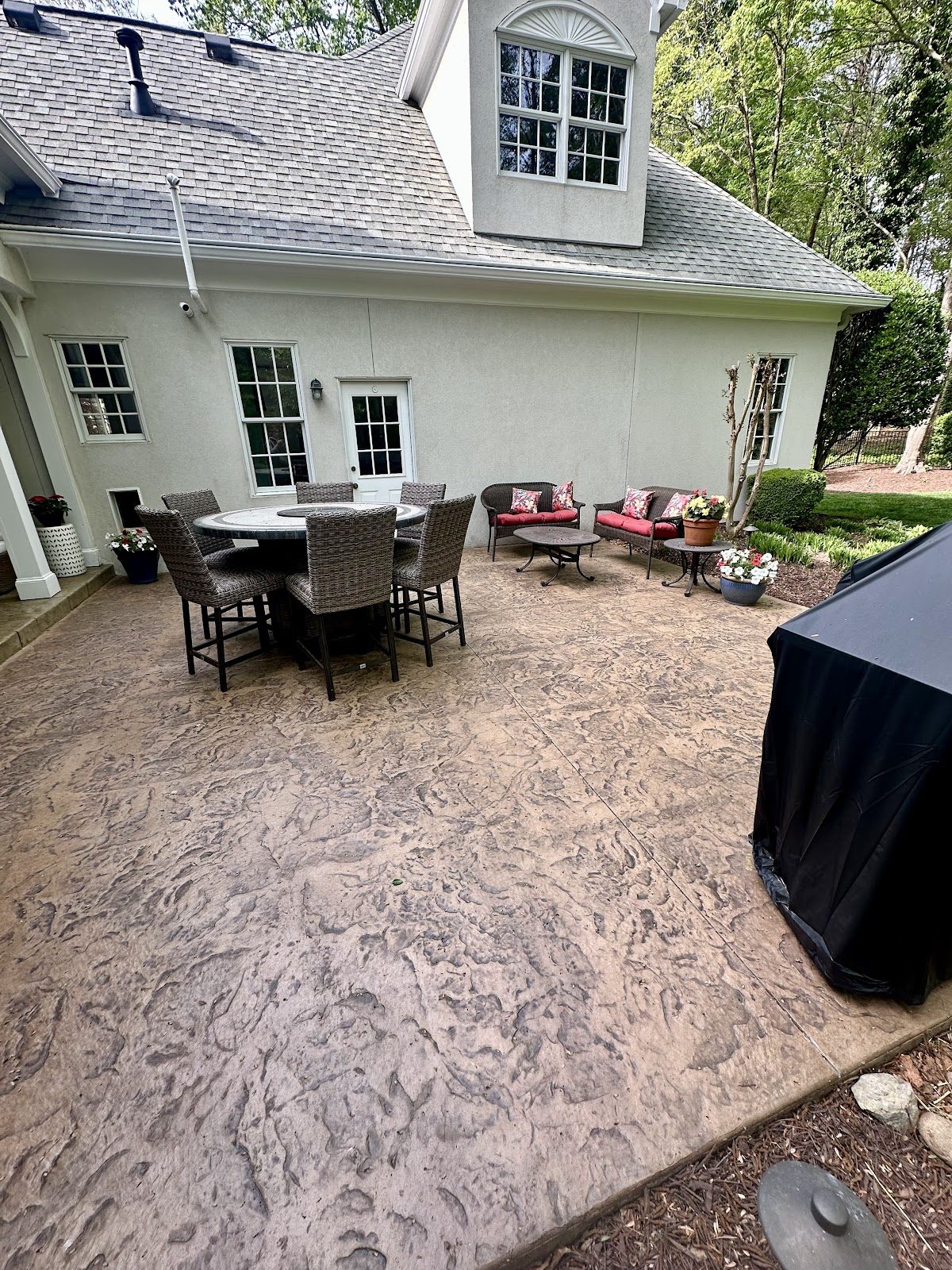
Design for spring and autumn, not the peak of summer
This is the single most useful reframing available on a patio project and it costs nothing.
A patio designed for the hottest weeks of summer is a patio designed for the weeks when almost any outdoor space is pleasant. The months actually in play — the ones you either get or do not — are April, May, September and October, when the weather is good but not reliable and the evenings cool off quickly.
Designing for those months means three things: some protection from wind, a source of warmth for the evening, and enough sun to be worth sitting in when the air is cool. That is a different brief from the shaded, breezy space you would design for August, and where the two conflict the shoulder seasons are usually the better bet — because in July you will go inside regardless.
Where to put a patio: sun, shade and wind
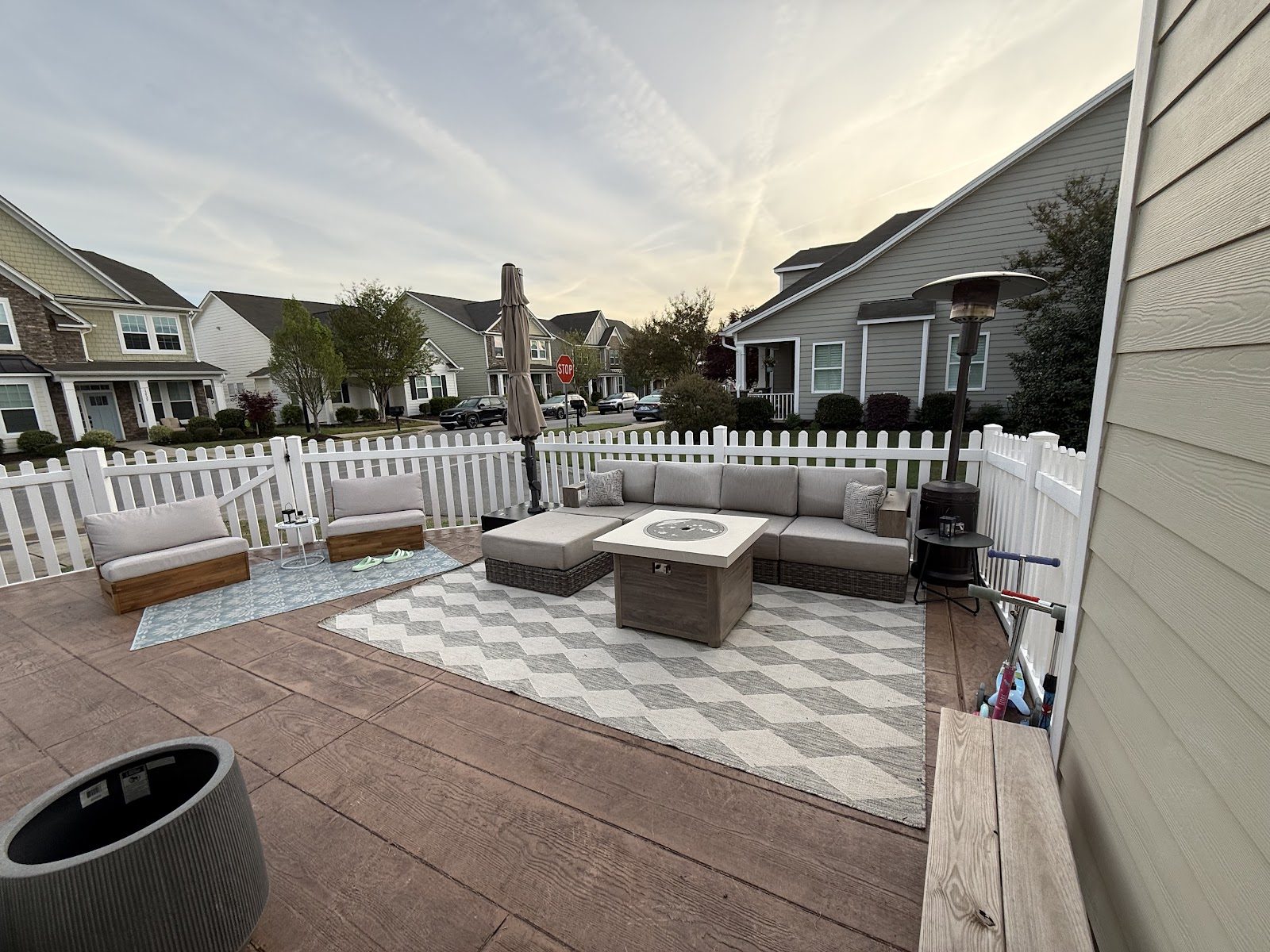
Where the patio goes is worth more thought than what it is made of.
| Consideration | The trade-off |
|---|---|
| Morning sun | Pleasant most of the year; useless if you only sit out in the evening |
| Afternoon / evening sun | The shoulder-season winner; the July problem |
| Some shade available | Extends usable hours in summer without costing spring |
| Wind shelter | The difference between a cool evening being pleasant or not |
| Route from the kitchen | A space that is awkward to carry food to gets used less |
| What you look at | Often decided last and remembered longest |
How big should a patio be? Size it for circulation
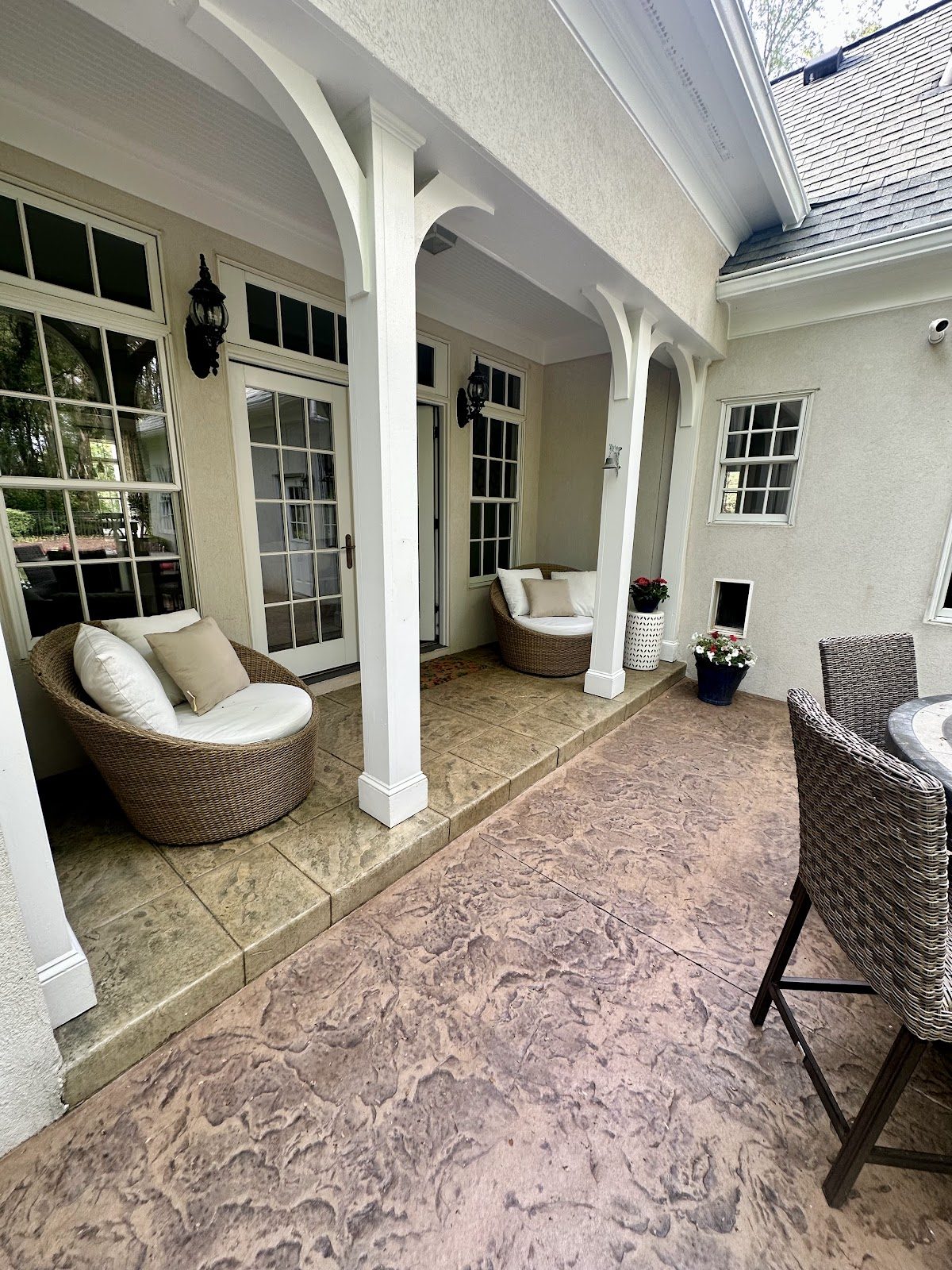
People size patios by laying out furniture. Furniture in use takes considerably more room than furniture at rest.
A dining chair pushed back from the table needs roughly three feet behind the table edge, and somebody has to be able to walk behind that chair without turning sideways. Around a fire pit, the circle you need is the circle of the seats plus the route around them, not the circle of the seats.
A patio that is slightly too small gets used less, and there is no way to fix it afterwards that is not a second pour with a visible joint. Extra area at the layout stage is the cheapest thing on the entire project — it is the same concrete, the same crew, the same day.
Mark it out with a hose or marking paint, put the actual furniture on it, and sit down. Ten minutes settles arguments no drawing will.
When can a patio be poured in the Piedmont?
This is the part that decides your schedule, and it runs on the weather rather than on your plans.
The Piedmont pour season runs roughly March to November. Concrete can be placed in cold weather with the right precautions, but the shallow freeze–thaw cycling this region gets is precisely what damages a slab that was not protected while it set. Winter work is a deliberate decision, not a default.
Working backwards from a spring you want to use it: the pour is the last step. Ahead of it sit the layout decision, any HOA submittal running on a monthly committee calendar, and any masonry — seat walls, fire pit base, steps — that has to be set out with the slab rather than added later. See masonry services.
Then there is curing. Published trade guidance puts walking at about two days and full design strength at 28, which matters for concentrated loads like a heavy fire feature or kitchen units. Our cure time guide covers that, including what a Piedmont summer does to a pour.
What we build is on the patios page, and what we do locally on the Mooresville page.
What actually extends the patio season
Not all season-extending additions are equal, and the cheapest is often the best.
- Shelter from windThe single biggest factor in whether an autumn evening is pleasant. A wall, a planting line or the house itself does more than any heat source, and it costs nothing to site the patio where the wind is already broken.
- A heat sourceA fire pit genuinely works at the shoulders, and it has to be planned with the slab because it carries its own base and clearances.
- Somewhere dry to sitA surface that drains and dries quickly is usable the morning after rain; one that holds water is not. That is a fall and a finish decision, made at the pour.
Year-round patio questions.
Siting, sizing and timing.